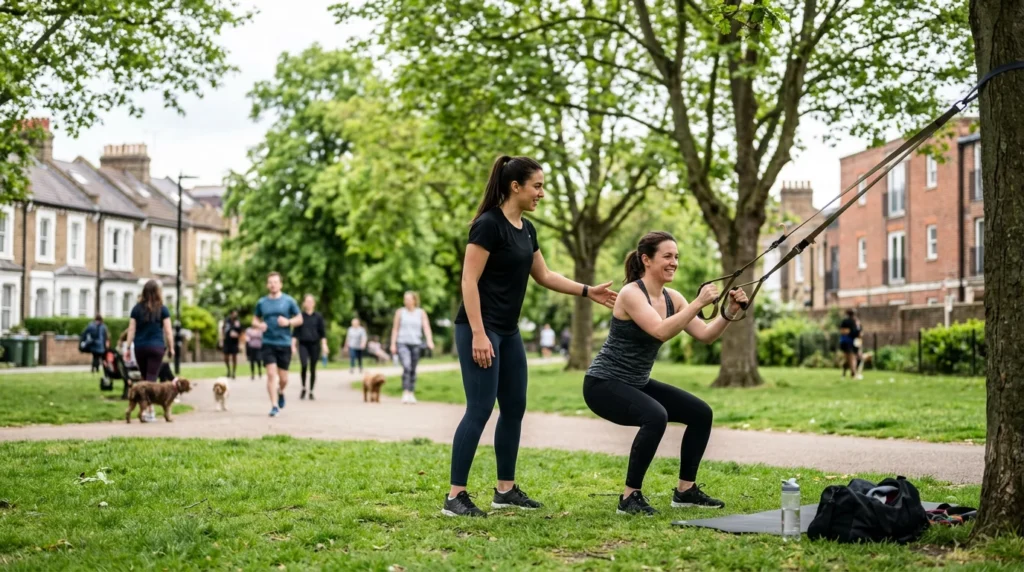
Quick answer: Choose a personal trainer in Stoke Newington by matching their coaching style and session setup to your goal, checking they can explain a clear plan (progression, recovery, and tracking), and making sure the basics fit your life: location, schedule, and budget. Ask how they handle injuries, technique coaching, and plateaus, then do a trial session to see if you feel listened to and coached safely.
What to Look For in a Good Fit
A good trainer feels like a practical problem-solver, not a drill sergeant or a cheerleader on autopilot. Start by writing down your main goal in plain English (get stronger, lose fat, move without pain, train for an event, or build a consistent routine). Then ask a potential personal trainer Stoke Newington how they would structure the first 4–8 weeks for that goal. You’re listening for a simple plan: what you’ll do, how it gets harder, and how they’ll know it’s working.
Pay attention to communication. A solid trainer can explain why you’re doing an exercise, what it should feel like, and what to adjust if it doesn’t. They should also ask about sleep, stress, previous injuries, and what you can realistically do between sessions. If the conversation is all “motivation” and no method, progress usually stalls fast.
Practical fit matters too. Sessions that are easy to attend beat “perfect” sessions you keep skipping. Check travel time, gym or park setup, and whether they offer early/late slots. Consistency is the multiplier.
Quick Stoke Newington logistics checklist: confirm the exact meeting point (gym floor, studio room, or which park entrance), ask what equipment is available on-site and what they bring, and check how they adapt if kit is busy or missing. If you’re training outdoors, ask what the plan is for rain, heat, or muddy ground (reschedule window, covered spot, or an indoor alternative). Also ask how they handle noise/crowds so you can still hear cues and train safely.
Questions to Ask Before You Book
Ask questions that reveal how they coach, not just what they promise. Good prompts include: “How do you teach technique?” “How do you progress someone who’s new to strength training?” and “What do you change if someone’s knee/shoulder gets irritated?” You want to hear about regressions, warm-ups, and swapping movements while keeping the goal intact.
Also ask how they track progress. One common approach is a quick check-in each week (energy, soreness, adherence) with a bigger review every 4–6 weeks to adjust the plan. For fat loss, tracking might focus on body weight trends, waist/hip measurements, and habits like step count or meal consistency. For strength, it may be lift numbers, rep quality, and how many reps you had “in the tank.” For pain-free movement, it can be symptom ratings, range of motion, and what daily tasks feel easier (stairs, sitting, lifting bags).
Finally, clarify what you’re actually getting. Some trainers include between-session programming, form feedback on videos, or nutrition habits coaching; others keep it strictly to the hour you’re together. Neither is automatically better—just make sure it matches what you need.
Red Flags That Waste Time or Risk Injury
Be cautious if a trainer pushes a one-size-fits-all plan, ignores pain signals, or rushes you into heavy lifts without earning the positions first. Soreness is normal; sharp pain, joint pain, numbness, or symptoms that worsen session to session aren’t “grind through it” problems.
Another red flag is constant maximal effort with no recovery strategy. Most people progress best with a mix of challenging days and easier technique or volume days. If every session is a test, fatigue builds and form breaks down.
Watch for vague nutrition advice presented as certainty. General guidance like increasing protein, planning meals, and managing portions can be helpful, but hard rules and extreme restrictions should come with clear reasoning and respect for your preferences and health history.
How to Make the Most of a Trial Session
Use a trial to check coaching quality. You should get a quick assessment (movement, goals, constraints), clear cues during exercises, and a session that feels tailored rather than copied. Expect them to adjust loads, ranges of motion, and exercise choices on the spot.
Afterwards, you should understand what the next steps would be: how often to train, what to do between sessions, and what progress should look like in the next month. If you leave confused about the plan, it’s hard to stay consistent.
Book a trial session and bring the questions above, then choose the trainer who gives you the clearest plan and the safest coaching.
If you’re looking locally, KBPT Personal Training East London is one option to contact for help.