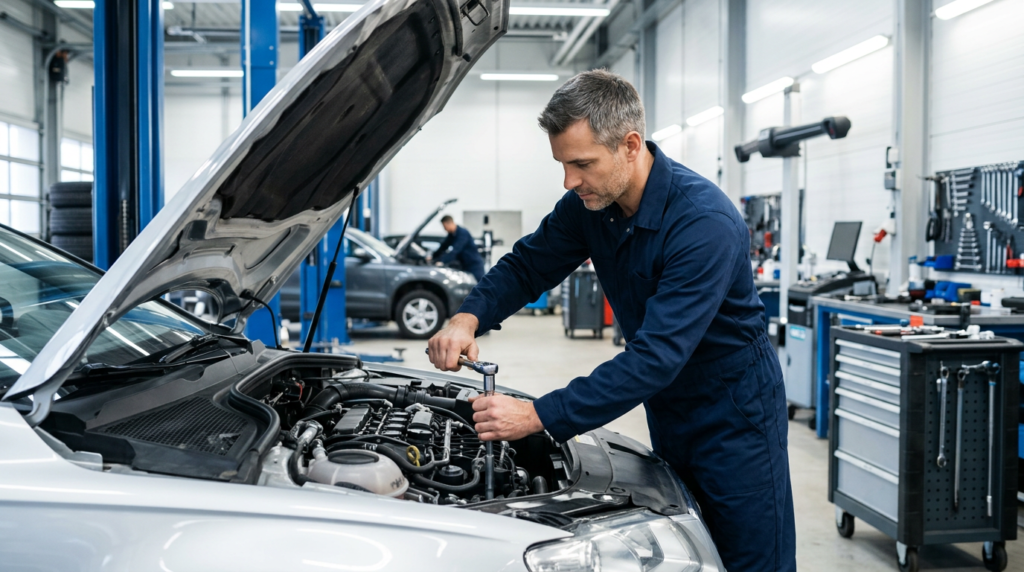
I know how stressful car trouble can be, especially when you rely on your vehicle every day. If you’re searching for automotive repair Buford GA, you want clear answers, trustworthy service, and a shop that understands the roads around Buford. For context on safety and vehicle health trends that affect drivers nationwide, the U.S. Census and public health resources show that regular maintenance and timely repairs reduce the chance of roadside breakdowns and related injuries, and the data reinforce why preventive care matters for families and commuters alike — visit the U.S. Census homepage for broader community statistics: https://www.census.gov.
Why local knowledge matters for auto repair
Buford sits where suburban life meets busy commuting corridors. Living in this part of Gwinnett County means driving on a mix of highways, neighborhood streets, and sometimes steep or hilly stretches near the Lake Lanier area. A repair shop that knows the local driving patterns, seasonal weather impacts, and common commuter issues can diagnose problems faster and recommend repairs that last. I prioritize shops that combine technical skill with local experience — they’ll ask questions about your commute and driving habits, not just list services from a menu.
Top services to expect from a quality auto repair shop
When you bring your car in, the most reliable shops cover a broad range of services with clear pricing and honest recommendations. Here are the services you should expect and why each matters for daily driving in Buford.
- Routine maintenance — oil changes, filter replacements, and scheduled inspections prevent small issues from becoming dangerous failures.
- Brake service — heavy traffic and stop-and-go conditions accelerate brake wear; proper diagnosis and rotor/pad replacement are safety priorities.
- Engine diagnostics and repair — modern cars rely on computer diagnostics to find intermittent issues before they become costly breakdowns.
- Air conditioning and heating — Georgia summers make A/C repairs essential for comfort and safety, while winter heating checks ensure defrosting systems work when needed.
Addressing modern trends: EVs and advanced driver systems
The automotive world is changing fast. Two trends are directly shaping repair shops and what drivers in this area need to know.
EV and hybrid maintenance
Electric and hybrid vehicles are becoming more common locally. While EVs have fewer moving parts, they require specialized knowledge for battery health, charging systems, and high-voltage safety. A forward-thinking shop invests in electric vehicle training and equipment to diagnose battery management issues and to handle software updates safely.
ADAS calibration and software updates
Advanced Driver-Assistance Systems (ADAS) — lane-keep assist, adaptive cruise control, and automatic emergency braking — need precise calibration after windshield replacement, suspension work, or wheel alignment. Shops that offer ADAS calibration use calibration targets and alignment lifts to keep these safety systems functioning correctly.
How to pick the right shop in Buford
Choosing a repair provider should feel straightforward. I recommend a short checklist to narrow options before you call.
- Ask about certifications — ASE certification and manufacturer-specific training show a commitment to technical excellence.
- Check communication style — a good shop explains repairs in plain language, outlines options, and lists estimated costs before work begins.
- Look for written estimates and warranties — quality shops provide written estimates and stand behind parts and labor with clear warranty terms.
- Read recent reviews — focus on how shops handle problem resolution and whether customers felt treated fairly.
Common Buford-area car problems and quick fixes
Some vehicle issues are more common here because of our driving patterns and climate. Understanding these can help you catch problems early.
Brake noise and vibration
Frequent short trips and stop-and-go congestion can glaze brake pads or warp rotors. If you hear squeal or feel pulsation, have the brakes inspected promptly to avoid more costly rotor damage.
Overheating or cooling system leaks
Hot summers place stress on cooling systems. Leaks, failing thermostats, or clogged radiators usually start as minor temperature fluctuations and escalate if not addressed. A cooling-system pressure test often reveals the issue quickly.
Battery and starter struggles
Cold weather is occasional, but batteries still age and drainage from short trips can lead to no-start conditions. A load test and inspection for corroded terminals can prevent being stranded.
What to expect during an inspection or service visit
A professional inspection follows a consistent flow so you leave with clarity about your vehicle’s condition. Here’s a typical sequence you should see at a quality shop:
- Walk-around and initial discussion about symptoms and driving habits.
- Computer diagnostics for any dashboard lights and a visual inspection of belts, hoses, brakes, and fluids.
- Detailed written estimate that separates parts, labor, and recommended vs. required repairs.
- Work performed with parts receipts and a final test drive to verify repairs.
How to spot upsells and get fair estimates
Good shops recommend what’s necessary and explain optional improvements. Here are practical tips to keep repairs honest and cost-effective.
- Ask for photos or video of worn parts to justify replacement recommendations.
- Request the old parts when replaced — most reputable shops will return them so you can see what was removed.
- Compare cautious timelines — if a shop pushes for immediate replacement without clear evidence, get a second estimate for expensive jobs.
- Prioritize safety items — brakes, tires, and steering components should come before cosmetic or convenience upgrades.
Maintenance schedule that saves money over time
Routine maintenance is the single best way to avoid large bills. Follow the manufacturer’s service intervals, but here are practical checkpoints for local drivers:
- Every 3,000–7,500 miles: oil and filter change (interval depends on oil type and manufacturer recommendations).
- Every 12 months or 12,000–15,000 miles: full vehicle inspection, fluid top-offs, and cabin filter change.
- Every 30,000–60,000 miles: transmission service, brake fluid check, and coolant flush where applicable.
- Every 5 years: battery condition check and replacement if showing reduced capacity.
Preparing for roadside emergencies in Buford
Even with great maintenance, roadside problems happen. I always recommend a small kit and a clear plan so a breakdown becomes manageable rather than catastrophic.
Include a compact jumper pack, reflective triangle, flashlight, and basic tool set. If you travel toward nearby Lake Lanier or the more rural stretches around Buford, add extra water, a phone charging pack, and a warm blanket or poncho.
Costs and budgeting for common repairs
Repair costs vary, but knowing ballpark figures helps plan financially. Local labor rates and parts prices can influence final bills. Expect brakes (pads and rotors) to be a few hundred dollars, while more complex items like transmission work or engine repairs can reach into the thousands. Financing options and service plans are available at many shops to spread larger costs into monthly payments when needed.
What customers often appreciate beyond repairs
A great shop offers convenience and peace of mind. Look for services like shuttle rides, loaner cars, or ride-share arrangements for longer repairs so your day isn’t derailed. Clear communication and follow-up after repairs also show a shop cares about long-term relationships, not just the next sale.
Local neighborhoods and landmarks that affect service choices
Buford drivers come from varied neighborhoods — downtown Buford, Lanterns or Sugar Hill areas, and communities near Mall of Georgia and the Lake Lanier shoreline. Shops close to major arteries like Peachtree Industrial Boulevard or Buford Drive often provide faster turnaround for commuters who need same-day service. If you rely on public events around the mall or travel frequently for work, prioritize shops that offer fast diagnostics and reliable parts availability.
Final checklist before you book service
Use this simple checklist so your next visit goes smoothly:
- Confirm the shop’s warranty terms for parts and labor.
- Ask for a written estimate and timeline before authorizing work.
- Request the technician or service manager’s direct questions so you get clear answers.
- Plan for transportation while your car is being serviced: shuttle, loaner, or ride-share.
When you want honest advice, quality repairs, and a team that knows the demands of driving in this area, reach out and schedule an inspection. For trusted automotive repair in Buford, GA, consider contacting Team Ryan Automotive to discuss your vehicle’s needs and get a clear estimate: Team Ryan Automotive.