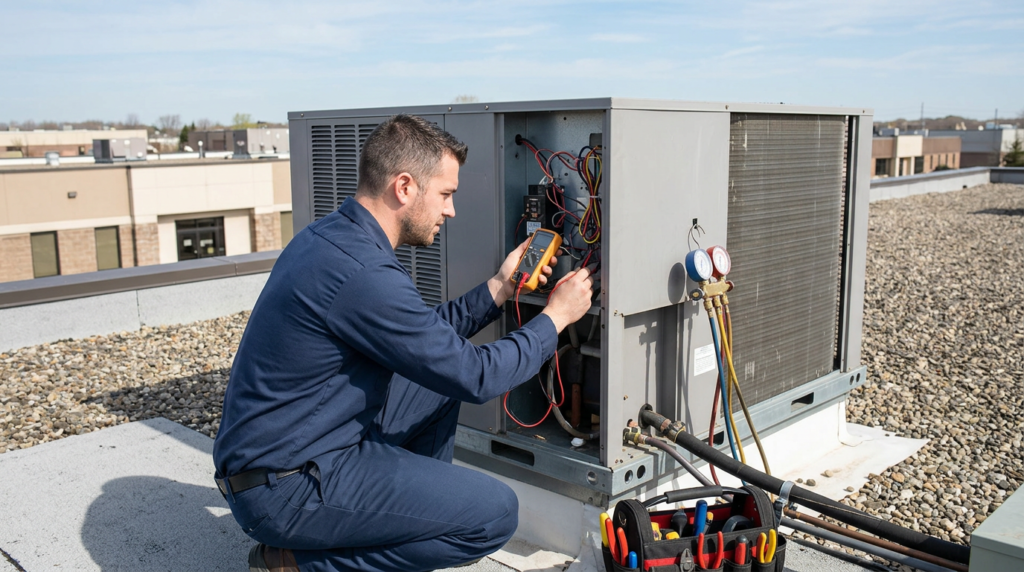
Quick answer: You likely need commercial HVAC repair if you notice uneven temperatures, rising utility bills, frequent cycling, unusual noises or odors, weak airflow, water around equipment, or repeated thermostat complaints. Don’t wait for a full shutdown—small issues like dirty coils, failing capacitors, refrigerant leaks, or clogged drains can quickly turn into lost comfort and potential product or equipment damage.
Fast Signs Something Is Wrong
Most commercial systems give warnings before they quit. If certain rooms never match the thermostat, airflow feels weaker than usual, or the unit short-cycles (turns on and off repeatedly), something is restricting capacity or confusing the controls. Rattling, grinding, or squealing often points to belts, bearings, or motor issues. Musty smells can signal microbial growth in drain pans or ductwork; a sharp electrical smell is a shut-it-down-and-call situation.
Comfort complaints are only part of the story. A sudden utility spike with no change in hours or weather can point to dirty condenser/evaporator coils, a stuck economizer damper, or a refrigerant issue that’s forcing longer run times. If you’re trying to decide who to call, a local shop that handles Sun Prairie commercial HVAC repair can usually triage whether it’s a quick service issue or a deeper diagnostic visit.
Sun Prairie-specific quirks show up a lot in shoulder seasons and winter. On mild spring/fall days, economizers can save energy, but a stuck damper or bad outdoor-air sensor can make spaces swing hot/cold or feel humid. In winter, freeze-ups can happen if a rooftop unit’s drain line or trap isn’t protected and condensate backs up, or if snow/ice affects intakes and airflow. Rooftop units also take the brunt of wind and debris, so loose panels, clogged screens, and vibration can show up after storms.
Severity Triage: Call Now vs. Soon vs. Schedule
Shut down and call now: smoke, a burning/electrical smell, repeated breaker trips, a gas odor, or water dripping near electrical components or into ceiling tiles. Turn the system off at the thermostat (and the disconnect if you’re trained and it’s safe), keep people away from the equipment area, and call for service.
Call within 24–48 hours: ice on the coil/lines, repeated short-cycling, big comfort complaints across multiple rooms, or a unit that runs constantly but can’t reach setpoint. These often escalate into compressor damage, water leaks, or a complete loss of heat/cooling.
Monitor or schedule: a minor airflow reduction, a single zone drifting a couple degrees, or occasional noise that doesn’t worsen. Still schedule service—these can be early signs of filter loading, belt wear, or control calibration drift.
Common Causes Behind the Symptoms
Many “mystery” HVAC problems trace back to a few repeat offenders. Dirty filters and coils reduce airflow and heat transfer, so the system can run longer, struggle to dehumidify, and in some cases ice up. Failed capacitors, contactors, and relays can cause hard starts, clicking, or intermittent operation—especially during hot or cold snaps when equipment is under load.
Controls and ventilation issues are also common in commercial spaces. A miscalibrated sensor, a failing thermostat, or a programming error can make a unit behave erratically. Economizers that stick open can pull in too much cold air in winter; stuck closed, they can waste “free cooling” in mild weather. If you see ice, it can indicate low airflow or low refrigerant—confirm with diagnostic checks like static pressure, temperature split, and proper leak testing rather than guessing.
Water around the unit often traces to a clogged condensate drain, a cracked pan, or an improperly trapped drain line; confirm by inspecting the drain path and verifying the unit is pitched and draining correctly. For rooftop units, worn belts, loose pulleys, and clogged drain pans show up frequently during seasonal transitions, and wind-driven debris can block coils or screens.
What to Do Before You Call (And What to Leave Alone)
You can safely check a few basics: confirm the thermostat schedule and setpoint, replace or clean filters if your staff normally does that, and make sure supply/return vents aren’t blocked by boxes or furniture. Walk the space and note which zones are affected, any error codes on the thermostat or unit display, and whether the problem happens at specific times of day. That info shortens diagnosis time.
Skip anything that involves opening electrical panels, adjusting gas components, or adding refrigerant. If you smell gas, see smoke, hear loud metal-on-metal noise, or notice breakers tripping repeatedly, shut the system off and call for service. Repeated resets can turn a small electrical fault into a bigger failure.
Before you call, jot down the unit type (rooftop unit, split system, make-up air, etc.), approximate building square footage served, and any recent changes (new hours, remodeling, doors left open, new refrigeration or cooking loads). If possible, take clear photos of the thermostat display/error code, the unit nameplate (model/serial), any visible ice or water, and the breaker panel position. Treat it as an emergency call if there’s smoke, burning smell, gas odor, repeated breaker trips, or water near electrical—otherwise ask for the next available service window and mention whether you can shut the unit down without disrupting critical operations.