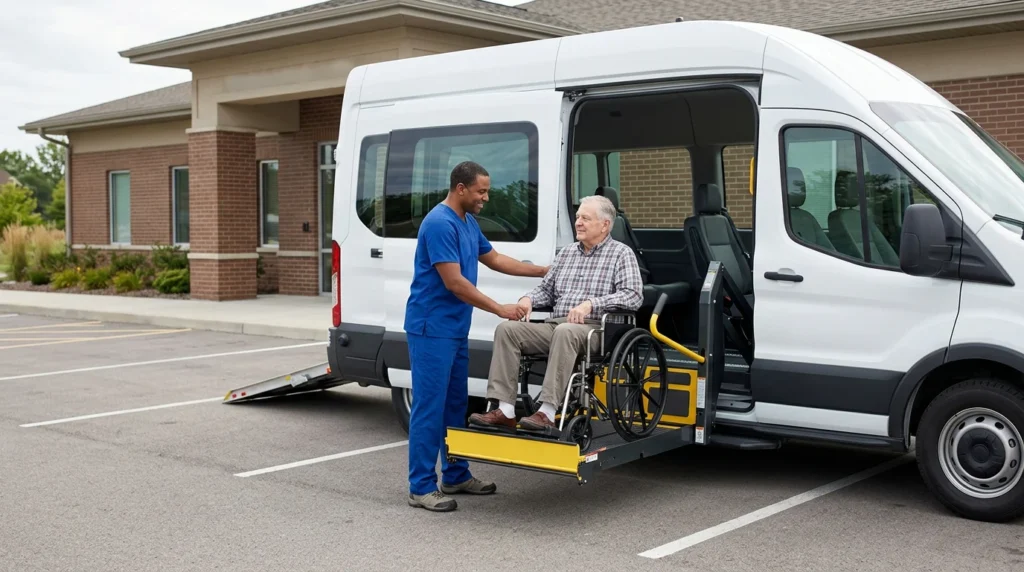
Quick answer: Plan long-distance medical transport by matching the patient’s mobility level to the right vehicle (wheelchair van, stretcher, or ambulance), confirming medical requirements (oxygen, monitoring, medications), and mapping the trip details (pickup access, rest stops, and receiving-facility timing). Share the patient’s transfer ability, equipment list, and any safety risks in advance so the crew can bring proper restraints, ramps, and staffing.
Start With Mobility and Transfer Ability
The fastest way to get the right transport is to describe how the person moves on a normal day: walking with assistance, using a wheelchair, or needing a stretcher. Mention if they can stand and pivot, need a slide board, or require a mechanical lift. Those details determine vehicle type, crew size, and the safest way to load and secure them.
Be specific about medical transport mobility needs like narrow doorways, steps at pickup, and whether the wheelchair is manual, power, or bariatric. Power chairs can be heavy and may not be safe to secure in every vehicle, so the team may transfer the rider to a transport wheelchair for the ride while the chair travels separately if space allows.
If the person is at high risk of falls, has severe pain with movement, or cannot tolerate sitting for long, a stretcher option is usually more appropriate than trying to “make a wheelchair work.” The goal is fewer transfers, less strain, and a calmer trip.
Confirm Medical Needs Beyond Mobility
Mobility is only part of the picture. Share any medical supports that must continue during travel: oxygen flow rate and delivery method, suction, feeding tube considerations, catheter or ostomy care, wound precautions, and required positioning (for example, keeping a limb elevated). If the patient has cognitive impairment, agitation, or a history of pulling at lines, mention that too so the crew can plan supervision and safe restraint options.
Clarify what level of clinical oversight is required. Non-emergency medical transport can handle many stable patients, while an ambulance is more appropriate for anyone needing active monitoring, frequent interventions, or who is medically unstable. If you’re unsure, ask the discharging nurse or physician what level of transport they recommend and whether a “medical necessity” form is needed.
Make the Long Trip Safer and Smoother
Long-distance transport goes better with a simple itinerary. Provide the pickup and drop-off addresses, the best entrance to use, and any time windows required by the receiving facility. Ask how the team handles restroom breaks for wheelchair or stretcher riders, and plan realistic stops if the trip is many hours. Bring a small bag with essentials that are easy to reach: medications due during transit, a charged phone, ID and paperwork, snacks if allowed, and spare medical supplies.
Watch for red flags that the plan isn’t right: uncontrolled pain, shortness of breath at rest, new confusion, or inability to sit upright safely. Those changes can mean the patient needs a higher level of care than originally planned. Communicating changes early prevents last-minute cancellations and unsafe transfers.
Questions to Ask Before You Book
Ask what vehicle will be used (wheelchair van, stretcher van, or ambulance), what equipment is included (ramps, stretcher, oxygen capability), and how the patient will be secured. Confirm whether family can ride along, what items can travel with the patient, and how the team coordinates with hospitals, rehab centers, or nursing facilities for discharge timing.
Also ask who is responsible for gathering paperwork and medications at pickup, and what happens if the facility is delayed in releasing the patient. For help arranging long-distance transport with the right mobility setup, contact Managed Medical Transport, Inc.