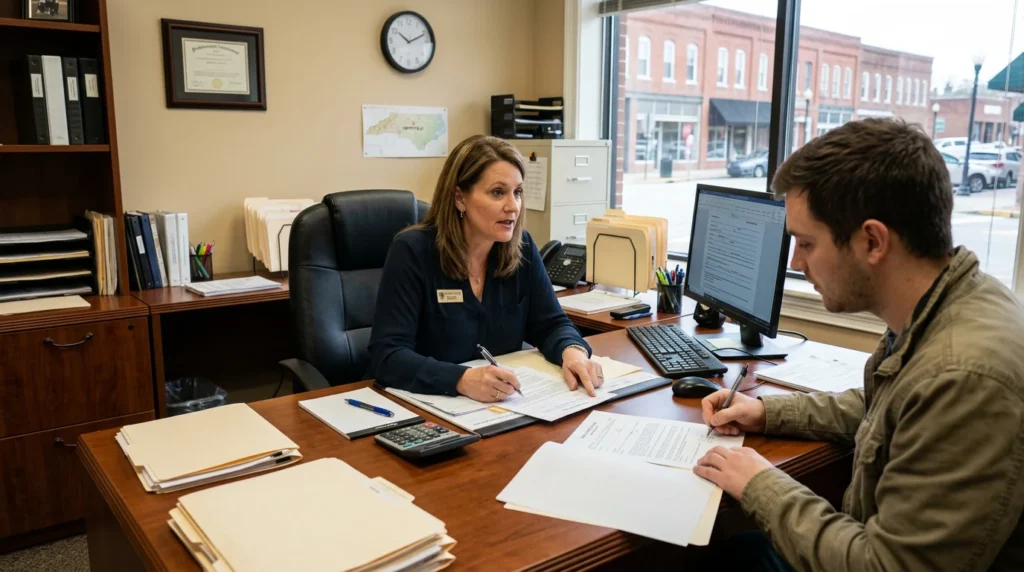
Quick answer: A bail bondsman posts a surety bond to the court so someone can be released from jail while their case moves forward. You’ll typically need the defendant’s full name and date of birth, where they’re being held, the charges if known, and the bond amount. Expect to review a state-regulated fee, possible collateral, and conditions like making court dates and staying in contact.
What a Bail Bondsman Actually Does
A bail bond is a promise to the court that the defendant will return for required hearings. If the court sets a bond amount you can’t pay in full, a bondsman can post a surety bond on your behalf so release can happen sooner.
In practice, you give the bondsman the booking details and the bond amount, then sign paperwork agreeing to the bond terms. The bondsman coordinates with the jail and court to get the bond posted and confirm release steps. If you’re searching for a bail bondsman Smithfield NC, have the defendant’s identifying information ready so the call stays focused and fast.
A bond doesn’t make the charges go away. It just changes where the person waits—out of custody instead of in jail—while the case proceeds.
Step-by-Step Timeline and Typical Delay Points
A typical timeline looks like this: you call with the defendant’s name, date of birth, and location; the bondsman verifies the booking and bond amount; you review and sign the bond agreement (often including indemnity terms and any collateral paperwork); the bondsman posts the bond with the jail/court; then the facility runs its release processing and the person is discharged.
Release timing varies by facility workload, but common delay points include an ID mismatch (name spelling, date of birth, or similar names), multiple holds (a second case, probation/parole detainer, or another county hold), a shift change or transport schedule that slows processing, and medical clearance requirements if the person needs evaluation before discharge. These are typical possibilities, not guarantees, and the jail can usually tell you if a hold or clearance is pending.
If you’re trying to speed things up, double-check the exact legal name, ask the jail whether there are any additional holds, and keep your phone available for signature questions or missing details.
North Carolina Specifics (General Info)
General guidance only, not legal advice. In North Carolina, pretrial release conditions are set by a magistrate or judge, and the paperwork may describe the release as a secured bond (money or surety required), an unsecured bond (a set amount owed only if the person fails to appear), or a written promise to appear (release without a money bond, based on the person’s agreement to return). Conditions can also include things like no-contact orders, travel limits, or check-ins.
If you’re unsure what type of bond was set, ask the jail or clerk what the release order says and whether a surety bond is permitted. A bondsman can only help if the court’s order allows a surety bond for that case.
Fees, Collateral, and a Neutral Next-Step Checklist
In North Carolina, bail bond premiums are regulated. The statutory rate is commonly described as 15% of the bond amount under North Carolina law (see N.C. Gen. Stat. § 58-71-100), but you should confirm the current statutory rate and how it applies to your situation before signing anything.
Collateral may be requested depending on the bond amount, the type of charge, and the risk of missing court. Collateral can be something like a vehicle title, property-related documents, or other items of value, and it’s meant to protect against losses if the defendant doesn’t appear. Ask what triggers collateral, how it’s stored, and what documentation you’ll receive.
Before you commit with any bondsman, use this quick checklist: ask the exact fee percentage and get it in writing; ask for collateral terms in writing (what’s accepted, where it’s kept, and when it’s returned); request receipts for every payment and item turned over; confirm the return conditions for collateral (what must happen in court for it to be released); and ask how after-hours calls, signatures, and posting work so you know what to expect if this happens at night or on a weekend. Get Out Bail Bond can help answer these questions and explain the paperwork you’re being asked to sign.