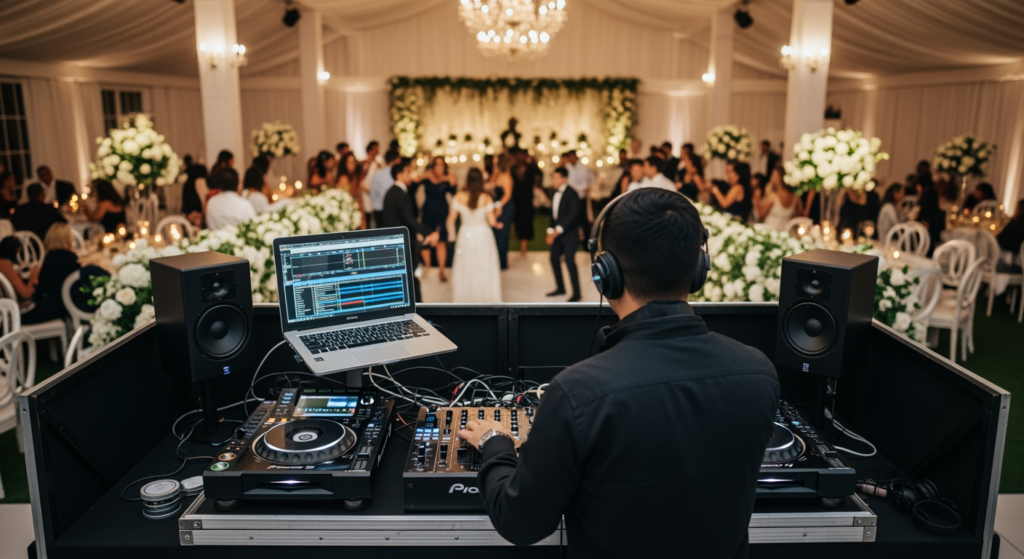
When you’re planning the perfect reception, finding the right djs for weddings can feel overwhelming. Hiring the right music professional makes a huge difference to guest energy and flow, and with recent shifts in how couples celebrate, the Office for National Statistics ONS notes that wedding priorities are evolving across the country. I’ve worked with couples and vendors long enough to spot the signals that separate a forgettable playlist from a night people still talk about a year later.
Why the right DJ changes the whole night
Music sets tone, controls momentum, and fills gaps between important moments. A great DJ reads the room and makes small course corrections without you noticing: switching from background jazz during canapés to a build-up that gets the dancefloor full after dinner, or cutting a track when the speeches run long so the flow doesn’t break. I always tell couples that your DJ is both a technician and a host — they handle sound and timing while guiding the vibe.
Choosing the wrong person often shows up as awkward tempo shifts, poor transitions, or songs that don’t match the crowd. Worse, some DJs show up with outdated equipment or playlists that drown out conversation. When you get the fit right, your timeline runs smoothly, guests stay engaged, and your evening can feel effortless.
What modern couples want
Today’s couples expect more than a stack of hits. They want thoughtful song selection, flexible playlists that reflect diverse guest lists, and a DJ who can blend live elements — like a saxophone or singer — with recorded tracks. Millennials and Gen Z couples increasingly use apps and streaming services to craft playlists, but they still rely on professionals to translate those lists into a live experience that reads the room moment to moment.
How to choose the best DJ for your wedding
Start with a clear brief. Know your venue’s setup, the number of guests, your preferred musical eras, and any must-play or off-limits tracks. Then evaluate potential DJs on three simple things: chemistry, experience, and technical quality. Chemistry matters because your DJ will be a visible part of your reception. Experience matters because different venues and guest mixes require different skills. Technical quality matters because good sound and lighting make a huge difference to the energy on the dancefloor.
- Ask for full audio/video samples of a complete reception set rather than short highlights.
- Request references from venues or recent couples with similar guest profiles.
- Check equipment lists and backup plans for power or technical issues.
- Confirm who will be on-site — a single DJ, a team, or additional technicians.
These steps will save you time and reduce risk. A professional DJ will happily walk you through their method for reading a crowd, handling requests, and working with bands or other vendors so transitions are seamless.
Local considerations for bookings
Local factors often determine the best choice more than national reputation. Noise curfews, venue size, parking access for equipment vans, and local traffic on wedding days all influence how a DJ plans the night. If your venue has a shared wall with residential neighborhoods or an early noise cutoff, an experienced local DJ will know how to manage volume, use directional speakers, or recommend set times to stay compliant without killing the atmosphere.
Booking timelines are also local. Popular DJs in busy months can be reserved 12–18 months ahead, while in quieter seasons you may find excellent options with shorter lead times. If you haven’t decided on a venue yet, choose a DJ who is flexible about setups and can adapt to multiple spaces — ballroom, marquee, or barn — and ask whether they have experience with the venue you’re considering.
Trends to watch
Wedding music trends shift faster now thanks to social media and streaming playlists. Two trends are especially relevant right now.
First, TikTok-driven track popularity means songs from unexpected genres climb wedding playlists quickly. Couples want a mix of the viral and the nostalgic, so savvy DJs keep a finger on platform trends while balancing classics that older guests will enjoy. Second, hybrid entertainment — where DJs blend live performers (a violinist, sax player, or singer) into mixes — is growing. This approach gives the polish of live music with the variety of recorded tracks and creates moments that feel bespoke and memorable.
Other trends include eco-conscious choices like reusable decor for DJ setups and wireless solutions that reduce gear load. Silent discos are also increasingly popular for late-night celebrations where venues have strict noise rules. A forward-thinking DJ will offer options to match these trends while keeping the night cohesive.
Services and problem-solving
Different DJs offer different service packages. Understanding what each package includes helps you evaluate value, not just price. Typical services and how they solve common problems include:
Ceremony sound: Wireless mics and discreet speakers ensure vows and readings are heard; the right setup prevents awkward quiet moments and makes recordings clearer for later.
Reception music and MC duties: DJs who double as experienced MCs can keep timelines on track, make introductions professionally, and create a warm flow between speeches and dances. That prevents long, awkward pauses that cool a crowd off.
Lighting and staging: Simple wash lighting and a clean stage setup transform a space without overdoing it. Professional lighting lifts photos and creates a welcoming dancefloor without blinding guests.
Must-ask questions for your DJ
- What is your backup plan for equipment or power failures?
- How do you handle requests from guests versus the couple’s playlist?
- Can you describe a past wedding where something went wrong and how you fixed it?
- Do you carry public liability insurance and provide a contract with clear cancellation terms?
These questions reveal how professional and prepared a DJ is. Real answers will include specific past examples and a willingness to put key promises into writing. If a DJ hesitates on insurance or a clean contract, that’s a red flag.
Budget and pricing
Budgeting for a wedding DJ depends on date, reputation, package elements, and travel. Weekend peak dates typically cost more, and additional services — like ceremony PA, uplighting, or a second DJ — increase the price. Instead of focusing solely on hourly rates, consider the overall value package: does the quote include travel, setup and breakdown time, planning meetings, and coordination with your venue and other vendors?
To control costs without sacrificing quality, consider booking during off-peak months or weekdays, limiting the number of add-ons, or asking for a slightly shorter set time. Many DJs offer a planning meeting and a sample playlist to help couples visualize the night and make adjustments without additional fees.
Remember, a well-run reception can save money elsewhere by keeping the day on schedule, ensuring vendors don’t run over time, and preventing the need for last-minute fixes that often carry premium costs.
Day-of timeline and responsibilities
Clear responsibility lines reduce stress on your wedding day. Typically, the DJ is responsible for the ceremony PA, reception sound, lighting, and MC duties. Vendors, like photographers and caterers, will appreciate a DJ who understands timing: helping to announce meal courses, cue first dances, and signal the start of speeches. Share a master timeline with your DJ well before the event so they can prep playlists and cue points.
Here’s a common flow the DJ will manage: ceremony arrival and amplification, background music during drinks, a smooth transition into dinner playlists, MC and speeches coordination, a planned first dance, a set list ramping up energy post-first dance, and a cut-off or wind-down that respects venue curfews. When all suppliers are aligned on timing, the night runs like clockwork.
Final checklist and conclusion
Before you sign, run through this quick checklist with any DJ candidate: confirm equipment and backup plans, review the contract for clear cancellation and payment terms, verify insurance, request references from recent weddings, and agree on must-play and do-not-play lists. If you can meet in the venue beforehand, do it — the spatial check avoids surprises about speaker placement, power points, and sightlines.
Booking the right DJ is about matching style, reliability, and technical competence to your wedding vision. When you get that match, the DJ becomes the glue of the evening: keeping energy high, smoothing transitions, and making sure your music choices feel intentional and alive. I’ve seen couples worried about playlists become relaxed and present once they hand the reins to a pro who understands their night.
If you’re ready to talk through options, timelines, or how to translate a playlist into a flowing reception, I can help you identify the right priorities and questions to ask. For a reliable local team with flexible packages and hands-on event support, consider reaching out to Spin Sisters to discuss availability and what will work best for your date and venue.