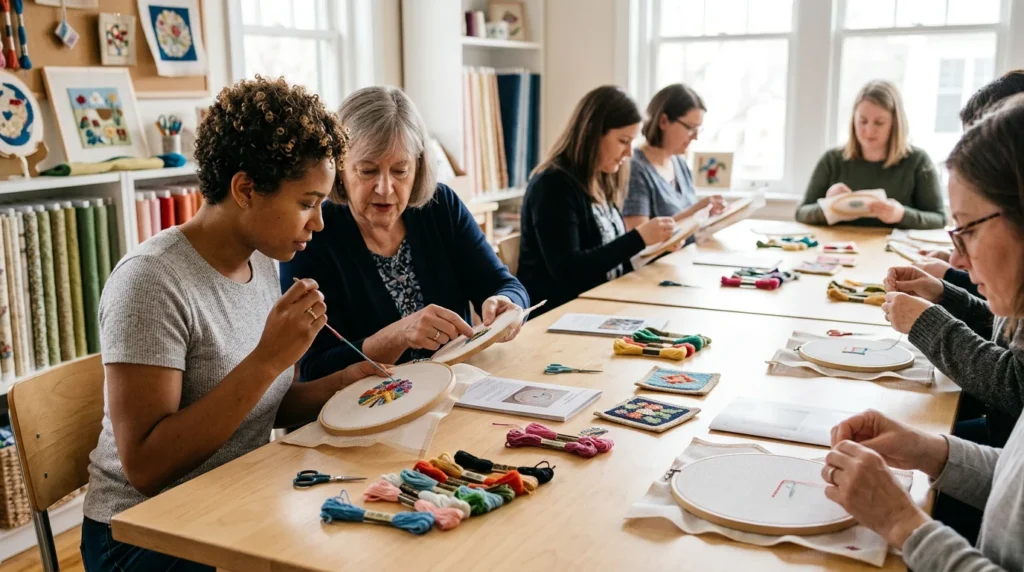
Quick answer: Beginner needlepoint classes typically start with how to read a canvas, choose threads, and make a few foundational stitches with even tension. You’ll practice starting and ending threads neatly, keeping the canvas square, and fixing common mistakes without unraveling everything. Most classes also cover basic tools, simple finishing options, and how to plan a first project that won’t feel overwhelming.
What You’ll Learn in the First Few Sessions
Most beginners start by learning the “why” behind the tools: why a tapestry needle is blunt, why stretcher bars help, and how different threads behave on different canvas mesh sizes. A good class won’t rush you into fancy stitches before you can keep consistent tension and recognize what a correct stitch looks like on the back of the canvas.
You’ll usually work on a small sampler or an easy kit so you can practice without worrying about ruining an heirloom project. In many beginner classes like beginner needlepoint classes, you may get hands-on help with threading, anchoring your first stitches, and learning a couple of versatile stitches (often a tent stitch variation and a simple decorative stitch) that you can use on lots of designs—confirm the exact class format and curriculum when you sign up.
You should also expect coaching on “reading” your work: spotting skipped intersections, twisted stitches, and areas where the canvas is pulling out of square. Catching those early is the difference between a piece that lies flat and one that ripples after finishing.
Tools and Materials You’ll Probably Use
Classes usually introduce a short, practical supply list rather than a shopping spree. Common essentials include a blunt tapestry needle (size matched to your canvas), small sharp scissors, a laying tool or trolley needle (optional but helpful), and a project bag to keep threads from tangling.
Canvas and thread choices are where beginners can get stuck. Teachers often recommend starting with a clearly painted or well-charted design, a forgiving canvas mesh (often in the 13–18 mesh range for many beginners), and threads that don’t shred easily. You’ll learn how to “audition” thread coverage so the white canvas doesn’t peek through unless you want it to.
Expect to talk about frames versus stretcher bars versus stitching in-hand. Many beginners do best with stretcher bars because they keep tension more consistent, but some projects and stitchers prefer the flexibility of in-hand stitching.
Common Beginner Mistakes and How Classes Help You Avoid Them
The most common early problem is uneven tension: pulling too tight can distort the canvas, and stitching too loose can look fuzzy or leave gaps. In class, someone can watch your hand position and show small adjustments—like how you hold the needle, how you place your non-stitching hand, and how often you should check that the canvas is staying square.
Another frequent issue is starting and ending threads in a way that creates lumps. You’ll learn tidy starts (like an away knot or loop start when appropriate) and secure endings that won’t pop loose after finishing. You’ll also practice “tinking” (unpicking) safely, which is a skill that saves projects.
Many beginners also struggle with planning: jumping between areas, running long thread carries across the back, or choosing stitches too dense for the canvas. A class helps you sequence the work—background vs. focal areas, light to dark, and when to compensate stitches near curves or letters so the design stays crisp.
How to Pick the Right First Project and Questions to Ask Before You Enroll
A good first project is small, has clear boundaries, and doesn’t require precision color blending. Think ornaments, key fobs, small signs, or a simple geometric. Avoid huge backgrounds, lots of confetti-like color changes, or extremely detailed faces until you’ve built confidence.
Before you enroll, ask these 6 questions:
1) What’s the typical class size and how much individual help is realistic?
2) What’s included in the fee (instruction only, or also canvas/threads/tools)?
3) Is it a kit-based class, or can you bring your own project?
4) Are there any skill prerequisites (basic stitching, reading charts, threading needles)?
5) What’s the missed-class policy (make-ups, credits, or notes)?
6) What finishing support is offered (blocking guidance, finishing referrals, or a finishing class)?
For the most accurate details on schedules, supplies, and how the class is run, contact Blue Willow Needlepoint to confirm current availability and policies.